














The Fast Facts
- It’s hard to find a pet insurance policy that checks all your boxes, but we vetted the best options based on the most commonly searched filters.
- It’s wise to review policy details, compare options, and consider enrolling early to avoid exclusions for preexisting conditions.
- We screened insurers for different coverage types, costs to you, and any exclusions, and found ASPCA to be the best overall for pet insurance.
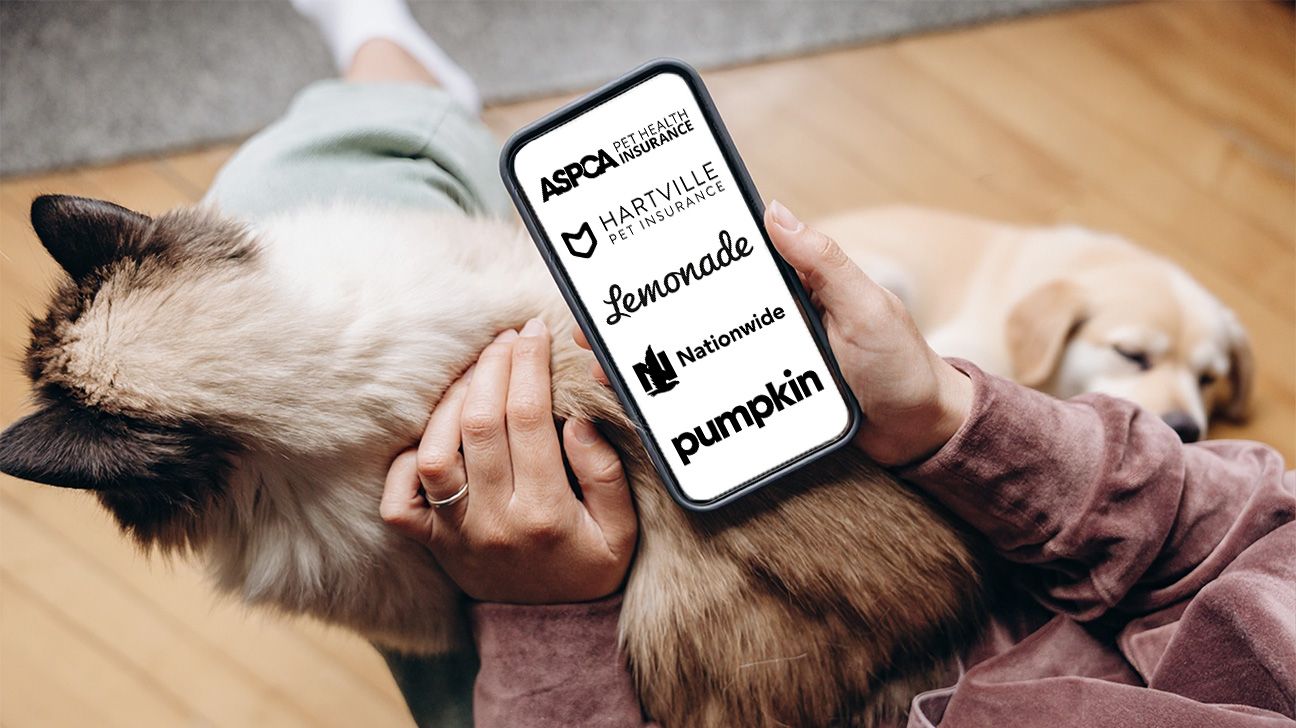
Premiums, deductibles, and reimbursements, oh my! The world of insurance, including pet insurance, can be confusing and intimidating. It is less about the cheapest option and more about the coverage that best suits your pet’s needs, your budget, and your level of proactivity.
Here are the top 10 vetted options for pet insurance, plus expert insights from a vet.
Lowest premium (w/highest deductible)
• $250
• $500
• illness: 14
• $250
• $500
• illness: 14
• $250
• $500
• possible per-incident deductibles
• illness: 14
• $200
• $400
• illness: 14
• $250
• $300
• $400
• $500
• illness: 15
• $250
• $500
• illness: 14
• $250
• $500
• illness: 14
• $250
• $500
• $700
• illness: 14
• $250
• $500
• illness: 14
• $250
• $500
• illness: 14
We chose the best pet insurance providers by factors like:
- associated costs
- restrictions
- reputation
- intuitive claims process and site experience
- coverage for senior pets and exotic pets, along with cats and dogs
- time frames for claims processing
- time frames for waiting periods
When choosing pet insurance, you may want to make notes of which plans are best for you and your companion, in these respects:
- Annual limits vs. unlimited coverage: High or unlimited annual limits may give more protection during costly treatments. Low annual limits can leave you at the mercy of ballooning costs.
- Types of deductibles: Annual deductibles apply once a year (better for chronic conditions), while per-incident deductibles apply to each condition or injury.
- Reimbursement options: Insurers use either benefit schedules (fixed amounts per procedure) or a percentage of the actual bill (usually 70% to 90%).
- Waiting periods: Most plans have waiting periods (usually 14 days for illness, longer for orthopedic injuries).
- Exclusions and loopholes: Common exclusions include preexisting conditions, hereditary or congenital conditions, dental issues, behavioral therapy, and breeding-related care.
- State Regulations and Consumer Protections: The NAIC Pet Insurance Model Act sets standards for preexisting conditions, wellness programs, and consumer protections.
State adoption varies. Check your state’s regulations for specific protections.
Sentiments like decision fatigue or that snarky generalization that bubbles up and says ‘getting pet insurance will just encourage me to frequent the vet for every little thing, I’m better off taking my chances’ are counterproductive to say the least.
One 2020 study actually finds that having pet health insurance does not increase the frequency of vet visits, but underinsuring can increase spending per visit.
There are some other blind spots to watch out for as well:
Pitfalls to avoid
- Waiting too long to enroll, and then something happens with your pet.
- Choosing the cheapest plan irrespective of the criteria you need.
- Misunderstanding reimbursement math.
- Missing breed-specific exclusions.
- Letting coverage lapse.
- Undercoverage of your pet, i.e., wellness coverage without catastrophic protection. or vice versa.
Veternarian Dr. Vincent Tavella agrees with the frustration behind the question and adds, “Our clinic has gone to bat with insurance companies for clients whenever they are claiming something to be a pre-existing condition that we feel is not.”
He says the whole pre-existing condition is murky water and “an obvious weakness of pet insurance as it exists right now. That being said, pre-existing conditions existed for people up until 2014.”
Tavella explains that there are two buckets: simple and complex medical issues. “Some pre-existing conditions are considered ‘curable,’ by [some] policies such as ear infections, diarrhea, and urinary tract infections (UTIs).”
On the other hand, he says, “The cost of treatment for chronic pre-existing conditions, such as arthritis and diabetes, will not be covered under most insurance policies.”
For example, allergies are a common issue for both pets and humans and are considered a pre-existing condition under pet insurance. So if you bring a dog in for something non-life-threatening that could be tied back to environmental allergies, your pet insurance likely won’t cover it, regardless of the vastly different symptoms. They could be scratching to the point of breaking skin, or have an aural hematoma (blood-filled ear flap) due to shaking an irritated ear profusely.
Veterinarian Dr. Vincent Tavella says when you bring your pet in for an ailment, you can be clear that you intend to demonstrate a resolved condition once healed. “If you’re planning to use pet insurance, it’s reasonable to ask whether the medical record will clearly reflect your pet’s diagnosis, treatment, and eventual resolution.”
He says each insurer has slightly different rules, but the documentation for the requirements of a resolved condition is similar.
“The primary evidence insurers use is your pet’s complete veterinary medical record. These records should show: the initial diagnosis of the condition, the treatment plan (such as medications or surgery), follow-up exams documenting improvement and final exam notes indicating the condition has resolved.”
Tavella adds that some insurers may also request a formal veterinary letter confirming that a condition has resolved, sometimes referred to as a medical clearance letter.
“The letter may include: the condition that was diagnosed, the date of treatment, confirmation that the pet has been symptom-free since treatment, a statement that the condition is clinically resolved.”
AKC Pet Insurance may cover an ailment if your pet is symptom-free and treatment-free for 12 consecutive months. Embrace Pet Insurance considers some ailments “curable pre-existing conditions” if your pet is symptom- and treatment-free for 12 consecutive months, and will then cover a new incident should it occur again.
Veternarian Dr. Vincent Tavella spells it out for us:
“Any veterinarian worth their salt would say that preventative care is extremely important for dogs and cats. As the saying goes — ‘an ounce of prevention is a pound of cure.’ This most certainly applies when considering the cost of medical care to prevent vs. treat any specific disease.”
Tavella points to the American Veterinary Medical Association (AMVA) recommends getting your pet’s teeth and gums annual at minimum by a vet for early signs of problems and to keep your pet’s mouth healthy.
The American Animal Hospital Association recommends this cadence for senior dogs’ and cats’ wellness:
• Blood pressure: Recommended annually for dogs; strongly recommended every 6 to 12 months in
healthy geriatric cats.
• Comprehensive (CBC) blood panel: Every 6 to 12 months for dogs and cats.
• Fecal testing for parasites: 1 to 4 times annually, depending on use of preventive products and lifestyle in dogs; 1 to 2 times annually, depending on health and lifestyle factors for cats.
• Urinalysis: Every 6 to 12 months for dogs and cats.
Most pet insurers require an illness/injury standard insurance policy before preventative care can be added. But some pet caregivers might have reasons for only wanting to purchase preventative coverage like dental care, vaccinations, and annual screenings.
Perhaps an employer covers general accident and illness pet insurance. Or maybe you have a kitten or pet that only stays indoors and at home, and just want to keep them proactively healthy.
Pet insurers like ASPCA (Pet Wellness Plan), Embrace (Wellness Rewards Plan), and Nationwide (Whole Pet with Wellness) offer standalone preventative coverage. Note: Nationwide’s Whole Pet with Wellness offering is available in only certain locations.
Before you rescue or adopt a new pet, it’s wise to choose the insurance that best suits your needs and budget. For some folks, a lower deductible is best, for others, a higher reimbursement is needed. Your younger pet might need more preventative care — an older companion could do with more dental and medication management.
Choosing the best pet insurance depends on your furry, feathered, or reptilian animal’s age, breed, and your budget. Getting clarity on coverage types, cost-sharing options, and exclusions is key.
- Hewitt J, et al. (2020). Aural hematoma and its treatment: A review. https://pmc.ncbi.nlm.nih.gov/articles/PMC7020633/
- Williams A, et al. (2020). The impact of pet health insurance on dog owners’ spending for veterinary services. https://pmc.ncbi.nlm.nih.gov/articles/PMC7401533/